Posts

Calculator

GeeksforGeeks Calculator

Free learning opportunity

During this lock down, Tata Steel is offering online courses open to all industry professionals.  These are the following courses they are offering for Rs 1/-. We need to login to www.capabilitydevelopment.org and signup with details and take on the course. 1) Advance Microsoft Excel 2) Basic Metallurgy 3) Basic TQM 4) Bearings 5) Bulk Material Handling 6) Compressor 7) Desulphurisation 8) Fan and Blower 9) Fuel and Combustion 10) Heat Treatment 11) Induction Motor 12) Industrial Water system 13) Industry 4.0 14)Instrument and Control System 15) Lifting Tools and Tackle 16) Limit, Fit & Tolerance 17) Machine Learning 18) Measuring instrument 19) MS Office 20) PLCs Basic 21) Power System Power Cables 22) Power System Protection 23)Power System Transmission and Distribution 24) Power Systems Earthing 25) Power Systems Generation 26) Primary Steel Making 27)Transformer Interested participants may spend their valuable time in learning.

Renault Kwid

Image
  The Kwid is Renault India’s latest small car on sale across India. With extremely competitive prices and a good blend of practicality and efficiency, the Kwid is the French carmaker’s take on the highly competitive small car segment in India. Named after the concept car that was shown at the 2014 Auto Expo, the Kwid finds its’ underpinnings on the Renault’s CMFA platform and is being produced at their Chennai factory with up to 98 per cent localisation. Exterior As a small car, the Kwid stands out from the crowd, thanks to its flared wheel arches and a forward leaning stance giving it a muscular appearance. It is the first car in the Indian market to debut the French automaker’s honeycomb grille and new headlight design featuring a C-shaped chrome trim. It gets an aggressive front bumper design that extends outwards and in the top spec variants houses the fog lamps. The side profile reveals the heavily flared wheel arches and a forward leaning stance. The windscr...

LATHE MACHINE

Image
LATHE MACHINE The lathe is a machine tool which holds the work between two rigid supports called centres (live and dead) or in a chuck.  The lathe carries following main parts : Bed  Head stock Tail stock Carriage Feed mechanism Legs                              BED  The bed of the lathe acts as a base on which fixed and operating parts of the lathe are mounted. This facilitates the correct relative location of the fixed parts and controlled movement of the operating parts. The vibrations while the machine should be less as possible for accuracy due to this reason the bed is made up of grey cast iron. HEAD STOCK The head stock is the part of lathe serves as housing for pulley and backgears, provides bearing for the machine spindle. It consist of following main parts : Cone pulley Backgears and backgear lever Head stock spindle Live centre...

SELF DRIVING CAR BY GOOGLE

Image
Google yesterday announced its own design for self-driving cars, which will drive people around without a steering wheel or pedals. It's the latest projec t from Google X, the company's skunkworks group headed by Google co-founder Sergey Brin. TWO PEOPLE, NO DRIVERS : The company has already shown off its own self-driving technology, which retrofits existing vehicles made by Toyota and Lexus. However this new version, which was announced by Brin at the Recode conference, is a new design that fits two people, and is driven entirely by computer using a variety of on-board computers and sensors.

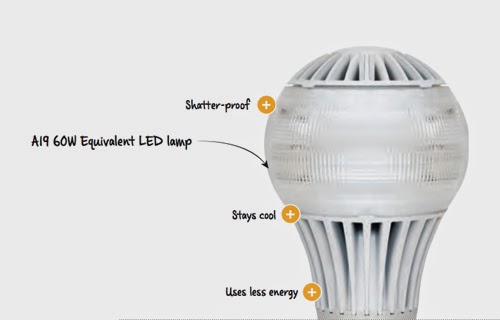
smart bulb

Image
SMART BULB HELPS YOU TO SLEEP AND AWAKE ON TIME Waking up in the morning is hard. But the problem is now no more with the discovery of new kind of smart led bulb which will help you to sleep and awake on schedule.  Melatonin hormone in the body which make us feel sleepy and awake. When we awake in the morning with fresh mood its level in the body is low but with our whole day busy schedule  or also due to sunlight  its level increses and at night it make us to feel sleepy . You program your desired sleep schedule in the app, which syncs up with the specially designed digital LED light bulb. When it’s time to ramp up for your next shift, the bulb will emit more light in the blue spectrum, which shuts down melatonin production, helping you to feel awake. But when it’s time to crash, the blue light is no more, allowing melatonin levels to switch on and you to drift off. At this point the company produces a pro-wake bulb and a pro-sleep version. The Rhythm Dow...

carbon nanotube as shock absorber

Image
SHOCK ABSORBERS OF CARBON NANO TUBE EXCEL AT DAMPENING VIBRATIONS The new class of nanostructured material has been developed by   a team of scientists at Rensselaer Polytechnic Institute which will used to reduce the vibrations in mechanical and electrical equipments. The Rensselaer research team, led by Koratkar, added carbon nanotube fillers to traditional vibration reduction materials to enhance their energy dissipation capability. Adding large quantities of nanoscale fillers increases the amount of surface area, and thereby increases frictional sliding that occurs at the filler-to-filler interface. The result is a decrease in vibrations.

DIESEL CYCLE

Image
Diesel cycle The diesel cycle is a compression ignition (rather than spark ignition) engine. Fuel is sprayed into the cylinder at P2 (high pressure) when the compression is complete, and there is ignition without a spark. 1. Isentropic compression (1 à 2). 2. Reversible constant pressure heating (2 à 3). 3. Isentropic expansion (3 à 4). 4. Reversible constant volume cooling (4 à 1). ‘ This cycle can operate with a higher compression ratio than the Otto cycle because only air is compressed and there is no risk of auto-ignition of the fuel. Although for a given compression ration the Otto cycle has higher efficiency, because the diesel engine can be operated to higher ratio, the engine can actually have higher efficiency than the Otto cycle when both are operated at compression ratios that might be achieved in practice

OTTO CYCLE

Image
OTTO CYCLE The Otto cycle is a set of processes used by spark ignition internal combustion engines (2-stroke or 4-stroke cycles). These engines a) ingest a mixture of fuel and air, b) compress it, c) cause it to react, thus effectively adding heat through converting chemical energy into thermal energy, d) expand the combustion products, and then e) eject the combustion products and replace them with a new charge of fuel and air. The different processes are shown in Figure 1. Intake stroke, gasoline vapor and air drawn into engine (5 à 1). 2. Compression stroke, p, T increase (1 à 2). 3. Combustion (spark), short time, essentially constant volume (2 à 3). Model: heat absorbed from a series of reservoirs at temperatures T2 to T3. 4. Power stroke: valve opens, gas escapes. 5. Valve exhaust: valve opens, gas escapes. 6. (4 à 1) model: rejection of heat to reservoirs at temperatures T4 and T1. 7. Exhaust stroke, piston pushes remaining products out of chamber (1 à 5...

HOW A CAR WORKS

Image
How the braking system works in  Basics Dual-circuit braking system A typical dual-circuit braking system in which each circuit acts on both front wheels and one-rear wheel.... How the charging system works in  Basics An alternator Inside an alternator the belt-driven rotor becomes an electromagnet when current is fed to it. As the rotor... How the starting system works in  Basics Inertia system An inertia type starter: this one is an 'inboard' type in which the Bendix gear throws the pinion... How an engine cooling system works in  Basics How the coolant circulates A typical water-cooling system with an engine-driven fan: note the bypass hose taking off hot coolant... How car heating and ventilation systems work in  Basics A typical car heating system A modern car has a ventilation system that provides a constant through-flow of fresh air,... The engine in  Basics Different engine layou...

HOW AN ENGINE WORKS

Image
ENGINE IN 3D VIDEO http://animagraffs .com/how-a-car-engine-works/ CLICK ON LINK TO KNOW EVERYTHING ABOUT ENGINE WORKING IN AN ANIMATED WAY

2 - stroke engine

Image
                                  TWO STROKE ENGINE The two stroke engine employs both the crankcase and the cylinder to achieve all the elements of the Otto cycle in only two strokes of the piston. Intake The fuel/air mixture is first drawn into the crankcase by the vacuum that is created during the upward stroke of the piston. The illustrated engine features a poppet intake valve; however, many engines use a rotary value incorporated into the crankshaft. Crankcase compression During the downward stroke, the poppet valve is forced closed by the increased crankcase pressure. The fuel mixture is then compressed in the crankcase during the remainder of the stroke. Transfer/Exhaust Toward the end of the stroke, the piston exposes the intake port, allowing the compressed fuel/air mixture in the crankcase to escape around the piston into the main cylinder. This expels the exhau...

Know about engine

Image
Four stroke engine Four Stroke Engine A four-stroke engine (also known as four-cycle ) is an internal combustion engine in which the piston completes four separate strokes which comprise a single thermodynamic cycle. A stroke refers to the full travel of the piston along the cylinder, in either direction. While risqué slang among some automotive enthusiasts names these respectively the "suck," "squeeze," "bang" and "blow" strokes. [1] they are more commonly termed INTAKE: this stroke of the piston begins at top dead center. The piston descends from the top of the cylinder to the bottom of the cylinder, increasing the volume of the cylinder. A mixture of fuel and air is forced by atmospheric (or greater) pressure into the cylinder through the intake port. COMPRESSION: with both intake and exhaust valves closed, the piston returns to the top of the cylinder compressing the air or fuel-air mixture into the cylinder he...

All Basics in c language

Image
The working of functions.   continue to learn c from basic download pdf note... Download pdf

stoichiometry defects in solid

Image
                                        Defects in solids Crystal defect - Any type of deviation or irregularities in ideal arrangement is called crystal defect These are of two types:- 1.point defect:-these are irregularities from ideal arrangement around a point in crystalline substance. 2.Line defect:-These are irregularities or deviation from ideal arrangement around entire row of lattice point in crystalline solid. Types of point defect:- 1. Stoichiometric defect:-These are point defect that do not disturb the stoichiometry of solid or formula of solid. these are also known as thermodynamic defect or intrinsic defect.                                topperslearn.blogspot.com Type of stoichimetric defects:- 1.vaccancy defects:-when some constituent particles are missing from cry...

Crystal lattice and unit cell

Image
Crystal lattice :  A regular 3-dimensional arrangement of points in space is known as crystal lattice. There are only 14 possible crystal lattices. They are known as bravies lattice. he Seven Categories of Bravais Unit Cells Category Edge Lengths Internal Angles Cubic ( a  =  b  =  c ) ( a  =  �/i> = g = 90 o ) Tetragonal ( a  =  b     c ) ( a  =  �/i> = g = 90 o ) Monoclinic ( a     b     c ) ( a  =  �/i> = 90 o    g) Orthorhombic ( a     b     c ) ( a  =  �/i> = g = 90 o ) Rhombohedral ( a  =  b  =  c ) ( a  =  �/i> = g   90 o ) Hexagonal ( a  =  b     c ) ( a  =  �/i> = 90 o , g = 120 o ) Triclinic ( a     b     c ) ( a     �/i>   g   90 o ) Unit cell :  It is smallest portion of crysta...

SOLID STATE

Image
The three states of matter : solid, liquid and gas are the result of molecular interaction. For any substance to be in a particular state of matter is a matter of strength of intermolecular forces which when strongest bring the molecules closest (as much as possible) and substance adopts definite volume and shape at room temperature. The same substance at three different temperatures (ii) Temperature above its m.p. but below b.p. Solids can be classified in two major categories on the basis of pattern of arrangement of constituent particles. (a) Crystalline Solid; (b) Amorphous Solid (a) Crystalline Solid: Solids in which constituent particles are arranged in long range ordered pattern. e.g. Salt, Diamond, Iodine (b) Amorphous Solid: Solids in which pattern is short range ordered or disordered. e.g. Plastic, Glass, Rubber. Amorphous solid are also known as super cooled liquid. Difference between Crystalline and Amorphous Solid Property Crystalline Solid     Am...

ELECTROSTATIC

Image
FRACTIONAL (STATIC) ELECTRICITY Electricity produced when two bodies are rubbed with each other (due to transfer of electrons). BASIC PROPERTIES OF CHARGES like charges repels each other and unlike charges attracts each other. Conservation of charges-Total charge of an isolated system is always constant. It can be transferred from one body to another. Charges are additive in nature q 1 =5C , q 2  = -10C q = q 1  + q 2  = - 5C Quantization of charges-Charge on a body is integral multiple of electronic charge. [Electric charge-Fundamental particle of charge] Integral multiple means e, 2e, and 3e... Thus q= ±ne, where n=0,1,2,3... NOTE 1e = -1.6 ×10 -19 C 1proton= +1.6 ×10 -19 C 1 particle or He = +3.2 ×10 -19  C Quark's e/3, 2e/3 COULOMBS LAW: It states that force of attraction or repulsion between two charges is directly proportional to the product of magnitude of charges and inversely proportional to the square of distance between them. ...